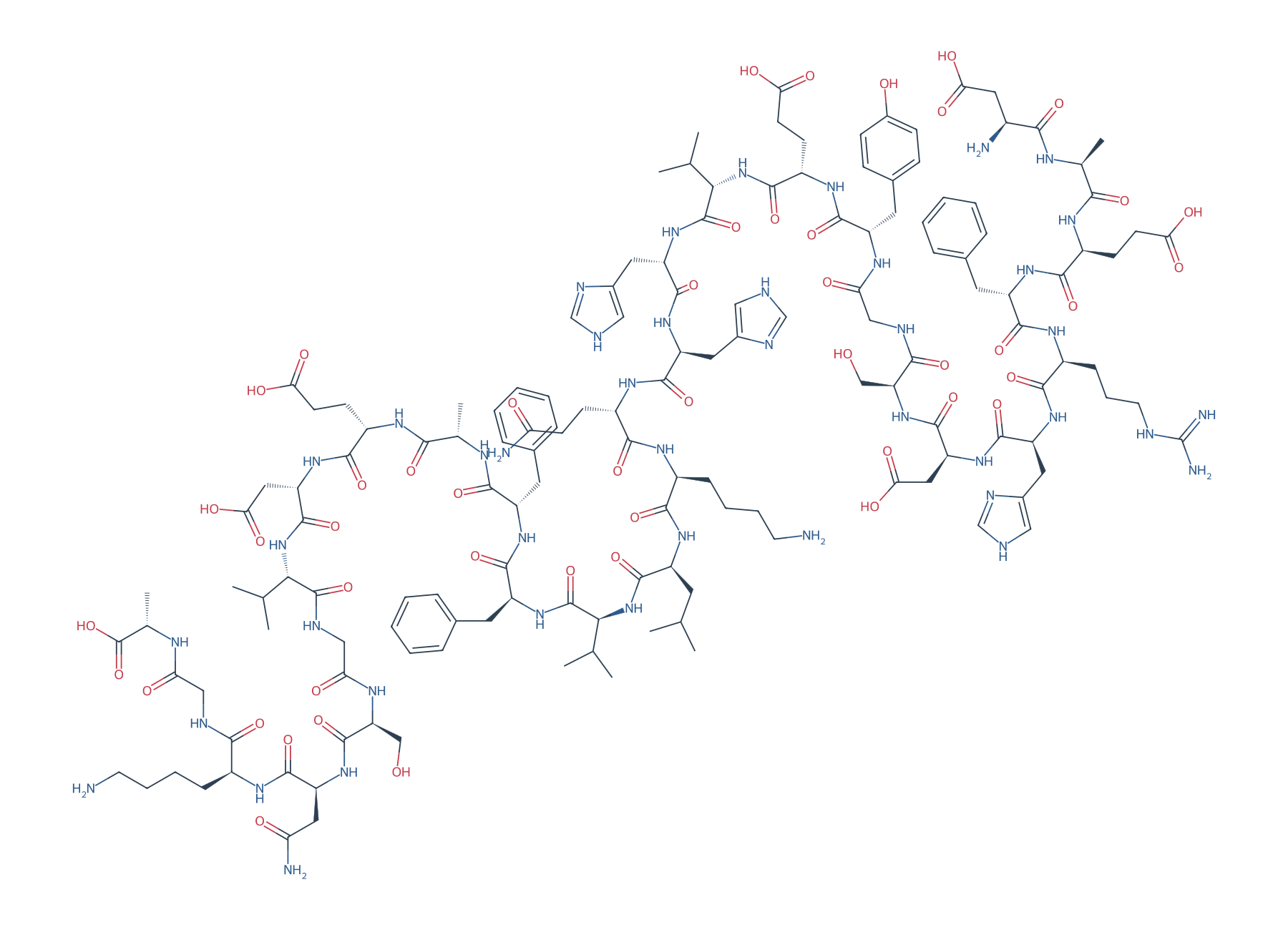
Description
Beta-Amyloid (1–30) is a 30-amino-acid peptide corresponding to residues 1–30 of the human amyloid-beta (Aβ) sequence. These positions map to residues 672–701 of amyloid precursor protein isoform APP770. Sequence reference: UniProt P05067.
Research context
This fragment retains the native Aβ N-terminal boundary and ends at alanine 30. Its defined C-terminal boundary separates the 30-residue sequence from the longer Aβ40 and Aβ42 chains. Comparing this fragment with longer sequences can help map the contribution of retained and omitted regions to molecular recognition, conformation, and self-association. It includes the KLVFF segment at Aβ residues 16–20, a sequence examined in studies of amyloid molecular recognition and assembly. Molecular-recognition reference.
Amyloid-beta research examines the relationship between peptide sequence and the development of oligomeric and fibrillar assemblies. A defined sequence and terminal boundary allow researchers to separate questions about molecular identity from the effects of the experimental environment. Observed assembly depends on the particular chain and the conditions used for its characterization. Research reference.
Research applications
- Comparing the Aβ(1–30) sequence with longer or overlapping amyloid-beta chains.
- Mapping sequence contributions to molecular recognition and peptide association.
- Analytical and biophysical characterization of a defined amyloid-beta fragment.
Molecular identity
- Catalog ID: PL-BET-011
- Product type: Peptide
- Reference species: Human (Homo sapiens)
- Sequence length: 30 amino acids
- Reference region: Human APP770 residues 672–701; beta-amyloid-relative numbering 1–30
- Calculated average molecular mass: 3,390.63 Da for the unmodified free-acid reference chain
- Sequence modification: Unmodified reference sequence
Reference sequence
DAEFRHDSGYEVHHQKLVFFAEDVGSNKGA
For in vitro laboratory research only. Not for human or animal administration.