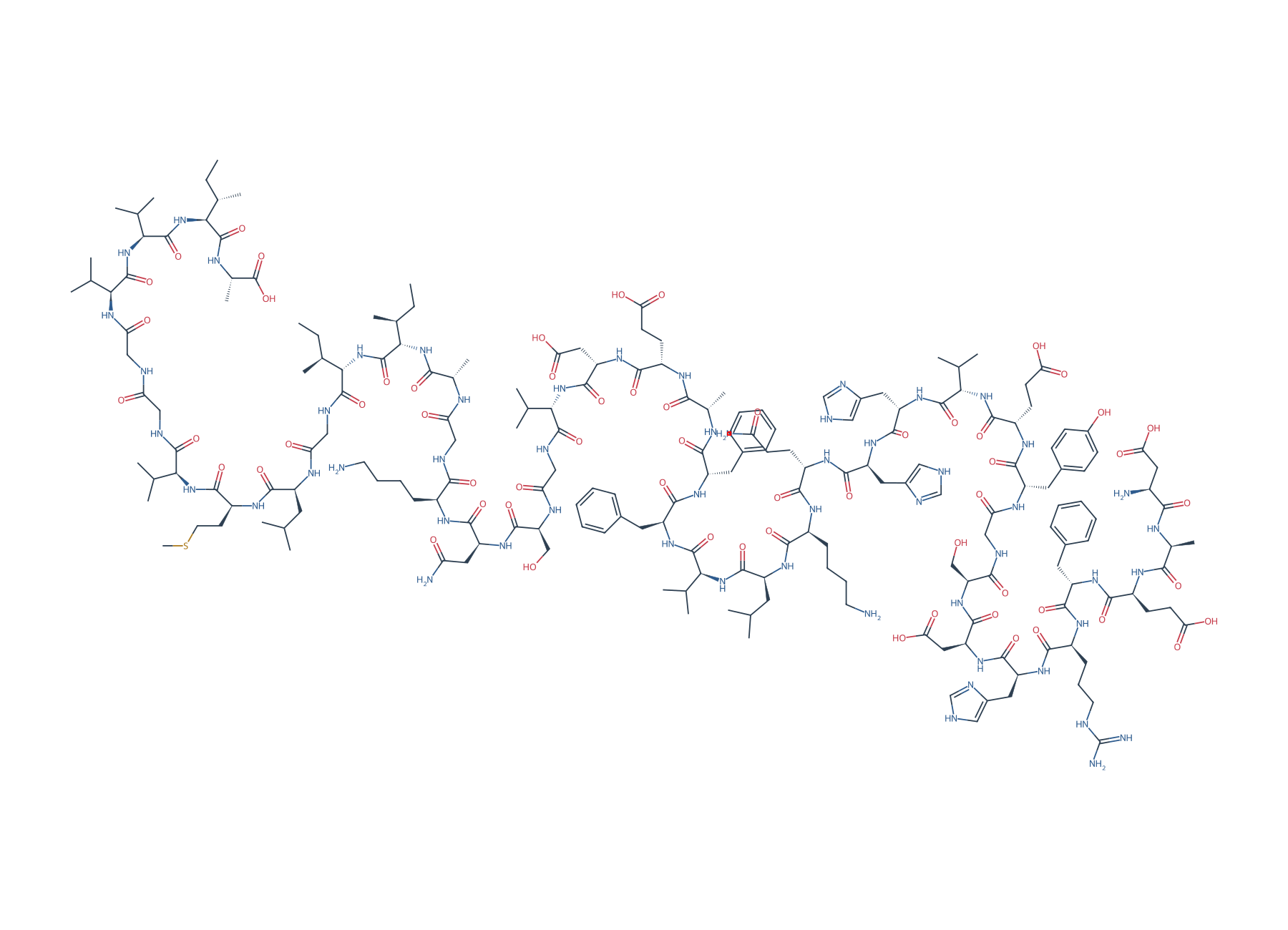
Description
Beta-Amyloid (1–42), also known as amyloid-β42 or Aβ42, corresponds to residues 1–42 of the human amyloid-beta sequence. This region falls within residues 672–713 of the human amyloid precursor protein, APP770. Its sequence includes the two additional C-terminal residues—isoleucine and alanine—that distinguish Aβ42 from Aβ40. Sequence reference: UniProt P05067.
Research context
Aβ42 is extensively studied in Alzheimer’s disease research to investigate how amyloid peptides associate and assemble into larger structures. Its aggregation behavior differs from that of Aβ40, making it an important subject for comparative studies of peptide length, self-assembly, and amyloid formation. Aggregation depends on experimental conditions, including peptide concentration, pH, temperature, and ionic strength.
Amyloid-beta research examines the relationship between peptide sequence and the development of oligomeric and fibrillar assemblies. A defined sequence and terminal boundary allow researchers to separate questions about molecular identity from the effects of the experimental environment. Observed assembly depends on the particular chain and the conditions used for its characterization. Research reference.
Research applications
- Peptide self-assembly and aggregation kinetics.
- The formation and characterization of oligomers and fibrils.
- Comparisons with Aβ40, truncated fragments, and sequence variants.
Molecular identity
- Catalog ID: PL-BET-001
- Product type: Peptide
- Reference species: Human (Homo sapiens)
- Sequence length: 42 amino acids
- Reference region: Human APP770 residues 672–713; beta-amyloid-relative numbering 1–42
- Calculated average molecular mass: 4,514.10 Da for the unmodified free-acid reference chain
- Sequence modification: Unmodified reference sequence
Reference sequence
DAEFRHDSGYEVHHQKLVFFAEDVGSNKGAIIGLMVGGVVIA
For in vitro laboratory research only. Not for human or animal administration.