Description
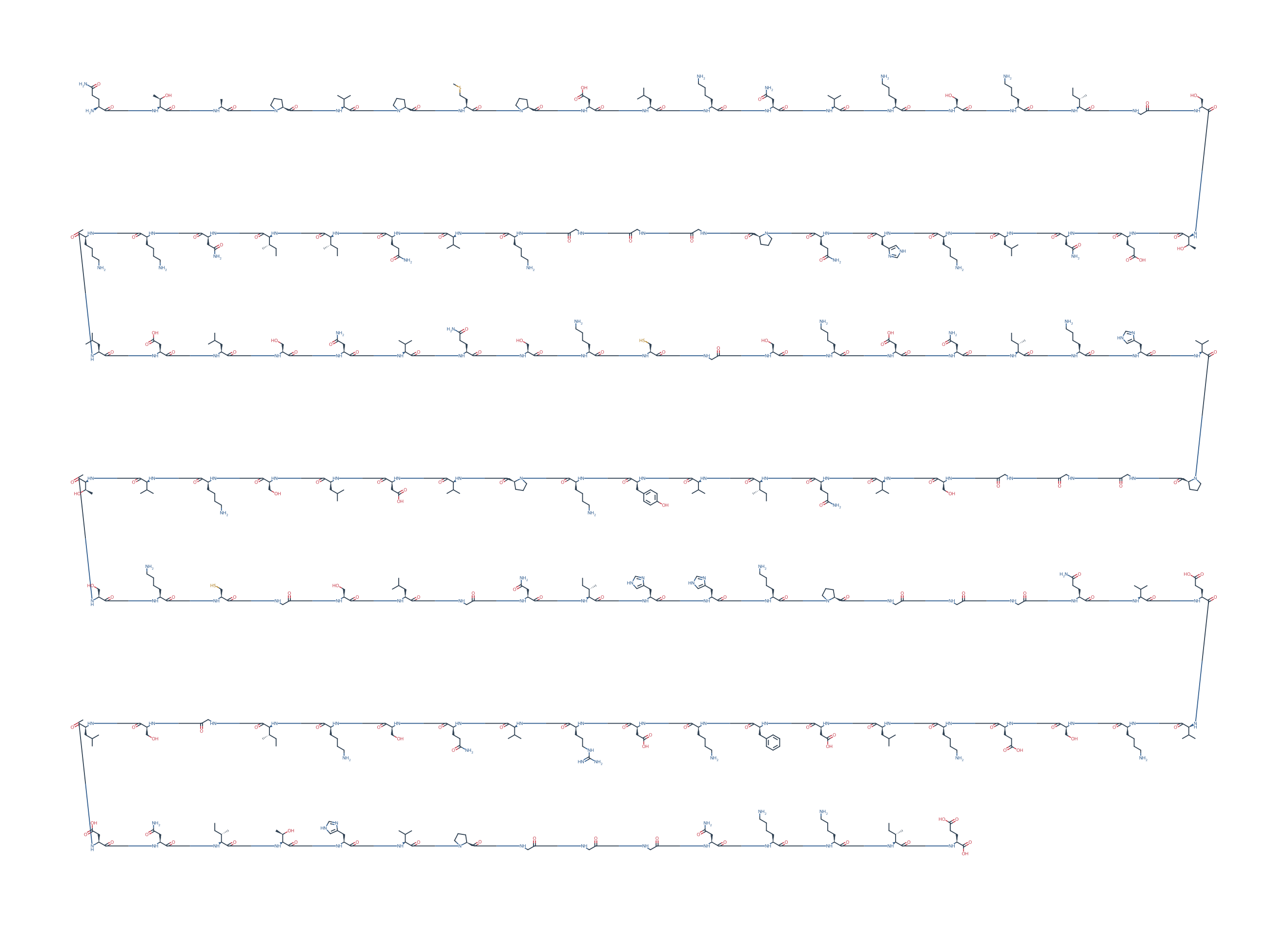
Tau 2N4R fragment (244–372) is a 129-amino-acid protein fragment spanning residues 244–372 of human tau 2N4R. All residue numbers refer to the 441-residue 2N4R isoform, UniProt P10636-8. The designation 2N4R identifies two N-terminal inserts and four microtubule-binding repeats in the parent protein. Sequence reference: UniProt P10636-8.
Research context
The fragment covers R1 residues 244–274, R2 residues 275–305, R3 residues 306–336, R4 residues 337–368. Its defined sequence boundaries provide a focused region for studies comparing tau repeat segments and longer chains. The sequence includes PHF6* (VQIINK, residues 275–280) and PHF6 (VQIVYK, residues 306–311), motifs examined in research on tau amyloid assembly.
Tau is a microtubule-associated protein encoded by MAPT. The parent protein contributes to microtubule assembly and stability, while tau self-association and amyloid formation are studied in Alzheimer’s disease and other tauopathies. Sequence-defined proteins and fragments help distinguish the roles of individual regions from the behavior of the complete isoform. Research reference.
Research applications
- Comparing defined tau 2N4R sequences, fragments, and substitution variants.
- Mapping regional contributions to tau conformation and molecular association.
- Sequence-focused investigation of tau assembly in in vitro research systems.
Molecular identity
- Catalog ID: PL-TAU-006
- Product type: Protein
- Reference species: Human (Homo sapiens)
- Sequence length: 129 amino acids
- Reference region: Human tau 2N4R residues 244–372; numbering refers to 441-residue isoform
- Calculated average molecular mass: 13,682.73 Da for the unmodified free-acid reference chain
- Sequence modification: Unmodified reference sequence
Reference sequence
QTAPVPMPDLKNVKSKIGSTENLKHQPGGGKVQIINKKLDLSNVQSKCGSKDNIKHVPGGGSVQIVYKPVDLSKVTSKCGSLGNIHHKPGGGQVEVKSEKLDFKDRVQSKIGSLDNITHVPGGGNKKIE
For in vitro laboratory research only. Not for human or animal administration.